×

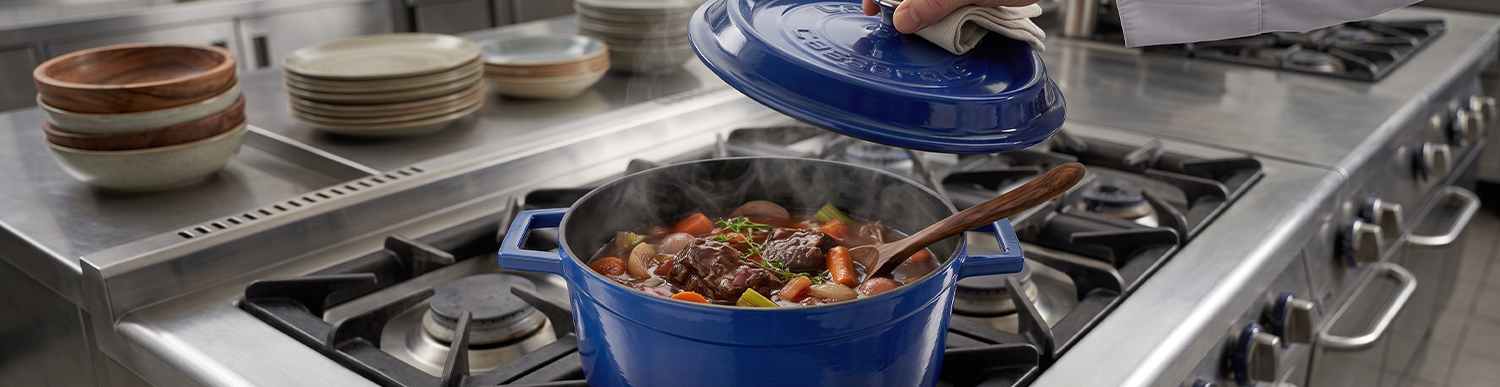
In professional kitchens, casseroles and stainless steel offer different advantages for different culinary tasks. Enamelled cast iron casseroles stand out for their high heat retention, even heat distribution, braising, slow cooking and oven-to-table serving capabilities. Stainless steel, on the other hand, can offer advantages where rapid temperature changes, sautéing and high-paced preparation are required. For professional kitchens, the most effective approach is not to choose equipment based solely on its material, but according to the cooking technique, thermal requirements, service model and operational needs.
Estimated Reading Time:
8–9 minutes
When comparing casseroles and stainless steel in professional kitchens, the choice should not be based solely on the material. When deciding between a casserole and stainless steel, factors such as cooking time, temperature control, how frequently the equipment needs to be moved and the service model should also be considered. Casseroles are particularly well suited to cooking that requires long, stable heat, while stainless steel can offer advantages for rapid temperature changes and high-paced preparation. Stainless steel also provides important advantages for a range of cooking techniques and intensive daily use.
Therefore, there is no single “best” piece of cooking equipment for professional use. The right choice depends on the type of food being prepared, the cooking technique, the service model and the requirements of the kitchen operation.
One of the most important differences between the two types of equipment is their thermal behaviour.
An enamelled cast iron casserole benefits from the thermal mass of cast iron. It may take longer to heat up, but once heated, it can retain heat for longer and help create an even thermal environment across the cooking surface.
The thermal performance of stainless steel equipment, meanwhile, depends on its construction. Professional multi-layer products with aluminium or copper cores, in particular, can provide a faster response to changes in temperature.
The main differences can therefore be summarised as follows:
| Criterion | Enamelled Cast Iron Casserole | Stainless Steel |
|---|---|---|
| Heat retention | Very high | Depends on product construction |
| Response to temperature changes | Slower | Generally faster |
| Long cooking times | Very suitable | Suitable |
| Braising | Very suitable | Suitable |
| Searing | Suitable | Very suitable |
| Oven use | Very suitable | Depends on the model |
| Oven-to-table serving | Strong advantage | More functional appearance |
| Acidic foods | Suitable due to enamel surface | Suitable |
| Heat retention during serving | Strong | More limited |
| Equipment weight | Heavier | Generally lighter |
Therefore, a professional cooking equipment comparison should be based not only on durability or price, but also on the role the equipment will perform in the kitchen.
One of the key advantages of enamelled cast iron casseroles in professional kitchens is their high heat retention capacity.
The cast iron body absorbs and stores heat. This can be particularly beneficial for:
braising,
slow cooking,
casserole-style dishes,
meat dishes,
dishes with sauces,
long oven cooking,
cooking at low and controlled temperatures.
In professional kitchens where service volumes can be high, temperature stability can help support consistency in cooking results.
However, high heat retention also has another effect: because of the high thermal mass of the cast iron body, a casserole may respond more slowly to temperature changes than many stainless steel products. Therefore, stainless steel may be more suitable for certain techniques where the chef needs immediate temperature control.
The performance of stainless steel equipment should not be assessed simply by the term “stainless steel”. Base thickness, multi-layer construction and the conductive core material can significantly affect thermal performance.
High-quality professional stainless steel products can be particularly advantageous for:
sautéing,
rapid sauce preparation,
deglazing,
boiling liquids,
recipes requiring rapid temperature changes.
For this reason, when choosing equipment for a professional kitchen, the difference between heat retention and response speed should be taken into account.
With techniques such as braising and slow cooking, the aim is not simply to reach a high temperature. The real requirement is to create a stable thermal environment throughout a long cooking period.
An enamelled cast iron casserole can therefore be a strong option for professional kitchens.
For example, during a braising process in which meat is first seared and then cooked slowly at a lower temperature after liquid is added, different stages of the process can be carried out in the same piece of equipment.
A casserole can also simplify workflow for recipes that require a transition from the hob to the oven.
This allows an operational sequence such as:
preparation → searing → long cooking → keeping warm → serving
to be carried out using the same piece of equipment.
This is important not only for cooking performance in a professional kitchen, but also for workflow and equipment efficiency.
Not every professional recipe requires long-term heat stability.
In some operations, the chef may need to increase or reduce the equipment temperature quickly. In such situations, high-quality stainless steel equipment can offer a more responsive working characteristic.
For example, when preparing a sauce, ingredients may need to be processed at a high temperature for a short period before the heat is reduced rapidly.
Similarly, speed is an important part of kitchen operations at sauté stations.
Therefore, the best cooking equipment for chefs does not have to consist of a single material group. In a professional kitchen, using equipment with different thermal behaviours together can provide a more functional solution.
In a professional kitchen, equipment performance does not end at the pass.
The contribution of the equipment to visual presentation can also be important, particularly in open kitchens, premium restaurants, hotels, buffets and sharing-style service models.
Enamelled cast iron casseroles offer a clear advantage in this respect.
Food can be:
prepared in the same equipment,
cooked on the hob,
finished in the oven,
transferred to the service area,
served at the table.
This oven-to-table approach can reduce the need to transfer food between different pieces of equipment while also helping food retain its temperature for longer during service.
The range of colours and design options available with enamel surfaces can also make casseroles part of the presentation rather than simply a cooking tool.
Stainless steel equipment can also be used for serving; however, particularly in premium table presentation, enamelled cast iron products can create a stronger visual identity.
When comparing kitchen equipment, durability should always be considered alongside the intended use scenario.
One of the key reasons stainless steel has been widely used in professional kitchens for many years is its mechanical durability, versatility and relatively low maintenance requirements.
Enamelled cast iron casseroles, meanwhile, have long-term usage potential thanks to their robust cast iron bodies. However, the enamel surface needs to be protected.
In professional use:
care should be taken to avoid strong impacts,
the risk of metal utensils scratching the surface should be considered,
sudden and excessive thermal shocks should be avoided,
the product should be cleaned appropriately after use.
There is an important distinction here:
An enamelled cast iron casserole does not require the same maintenance system as bare cast iron products.
Routine seasoning is not required thanks to the enamel surface. This can make maintenance procedures more practical in professional kitchens.
The high thermal mass of casserole products naturally results in greater weight.
This should be taken into account, particularly with larger-capacity products.
Stainless steel products are generally lighter and can offer an ergonomic advantage when equipment needs to be lifted frequently during service or moved continuously between stations.
Therefore, when making a purchasing decision, the question should not simply be:
“Which product is more durable?”
It should also be:
“How many times a day will this equipment need to be moved around the kitchen?”
In large professional kitchens, ergonomics is an important part of the equipment selection process.
A practical selection matrix can make equipment decisions easier.
braised beef and other long-cooked meats
meat dishes cooked over low heat
stews and casserole-style dishes
soups
oven-cooked dishes
long cooking at low temperatures
sharing dishes
buffet presentation
oven-to-table service
dishes where retaining temperature during service is important
rapid sautéing
sauce preparation
boiling liquids
operations requiring rapid temperature changes
high-volume preparation stations
operations where equipment is moved frequently
applications where lower equipment weight is important
This distinction demonstrates that in professional kitchens, these materials do not necessarily have to compete with each other; instead, they can serve as solutions for different tasks.
high heat retention capacity
even heat distribution
suitability for long cooking times
flexibility from hob to oven
helps retain heat during serving
premium oven-to-table presentation
no seasoning required thanks to the enamel surface
suitable for a wide range of dishes
may be heavier than stainless steel
responds more slowly to temperature changes
the enamel surface should be protected from impacts
generally lighter construction
suitable for rapid temperature control
wide range of professional applications
high mechanical durability
suitable for high-volume preparation operations
heat retention performance depends on product construction
not all stainless steel products offer the same thermal performance
may not provide the same visual impact as enamelled cast iron for oven-to-table presentation
For restaurants, hotels and catering businesses, evaluating equipment solely according to the initial purchase price is not sufficient.
The overall usage scenario should be taken into account.
The following questions can be considered during the purchasing process:
Which cooking techniques are used on the menu?
Will the equipment be used on the hob, in the oven or both?
Is long-term heat retention required?
Will the equipment go directly to the service area?
Is there a buffet or open-kitchen presentation?
How frequently will the equipment be moved during the day?
Which capacities are most suitable for the operation?
Is it compatible with the existing cooking system?
Are the cleaning and maintenance procedures suitable for the kitchen operation?
These questions turn a professional cooking equipment comparison from a list of technical specifications into a practical operational decision.
Yes. In fact, this may be the most effective approach for many professional kitchens.
Rather than expecting a single material to meet all cooking requirements, modern commercial kitchens can benefit from selecting equipment according to its specific role.
For example:
Stainless steel: rapid preparation, sautéing and operations requiring precise temperature changes.
Enamelled cast iron casserole: braising, slow cooking, oven cooking, heat stability and oven-to-table service.
This approach can help optimise a kitchen’s equipment portfolio according to the relationship between cooking technique → thermal requirements → operation → service.
There is no single winner when comparing casseroles and stainless steel for professional use. The right choice depends on the task the equipment is expected to perform.
If rapid temperature changes, lower weight and high-volume preparation operations are priorities, high-quality stainless steel equipment can be a strong solution.
If long cooking times, high heat retention, balanced thermal performance, braising and oven-to-table presentation are important, an enamelled cast iron casserole can offer clear advantages.
For professional kitchens, the most efficient approach is to view these two materials not as competitors, but as complementary solutions for different operations.
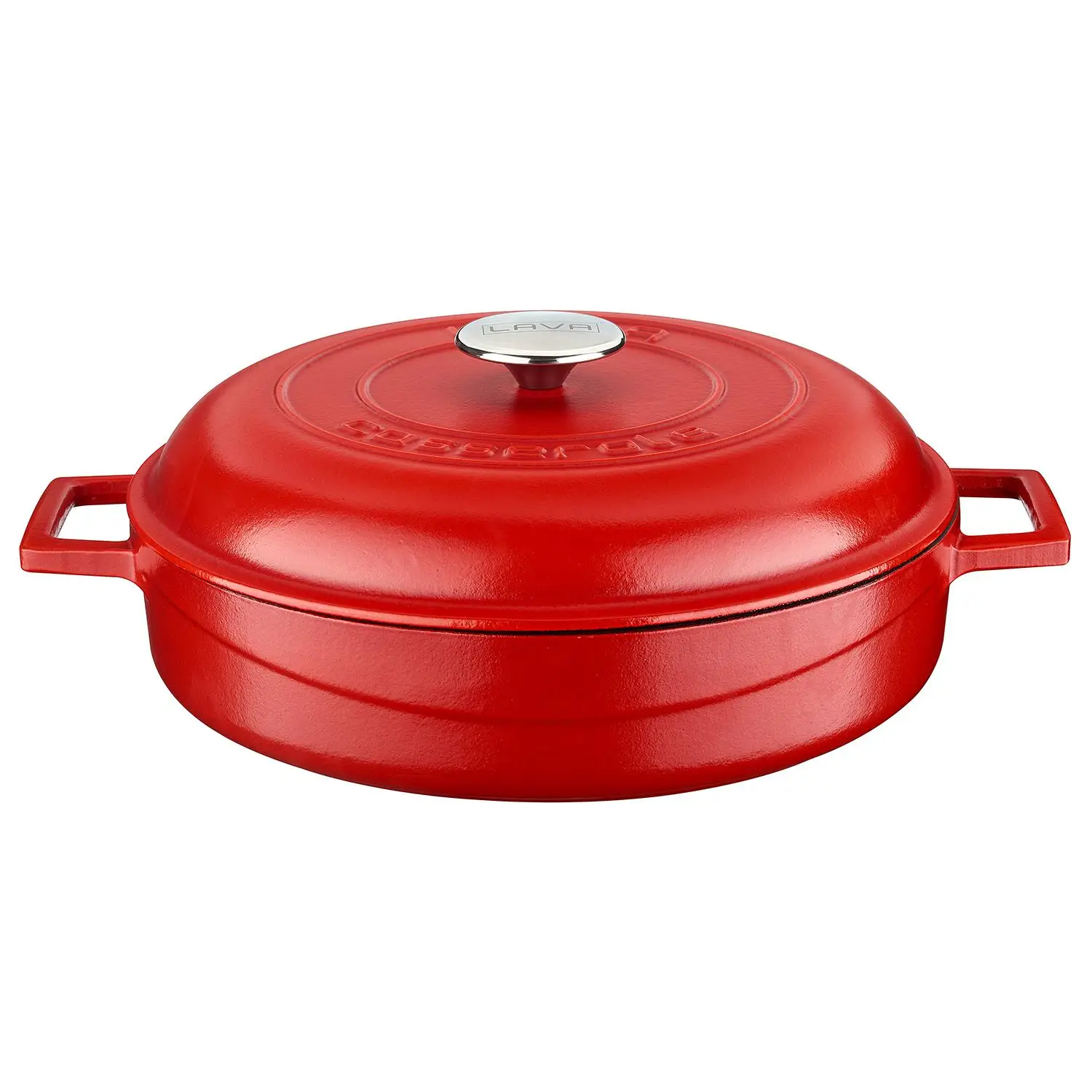
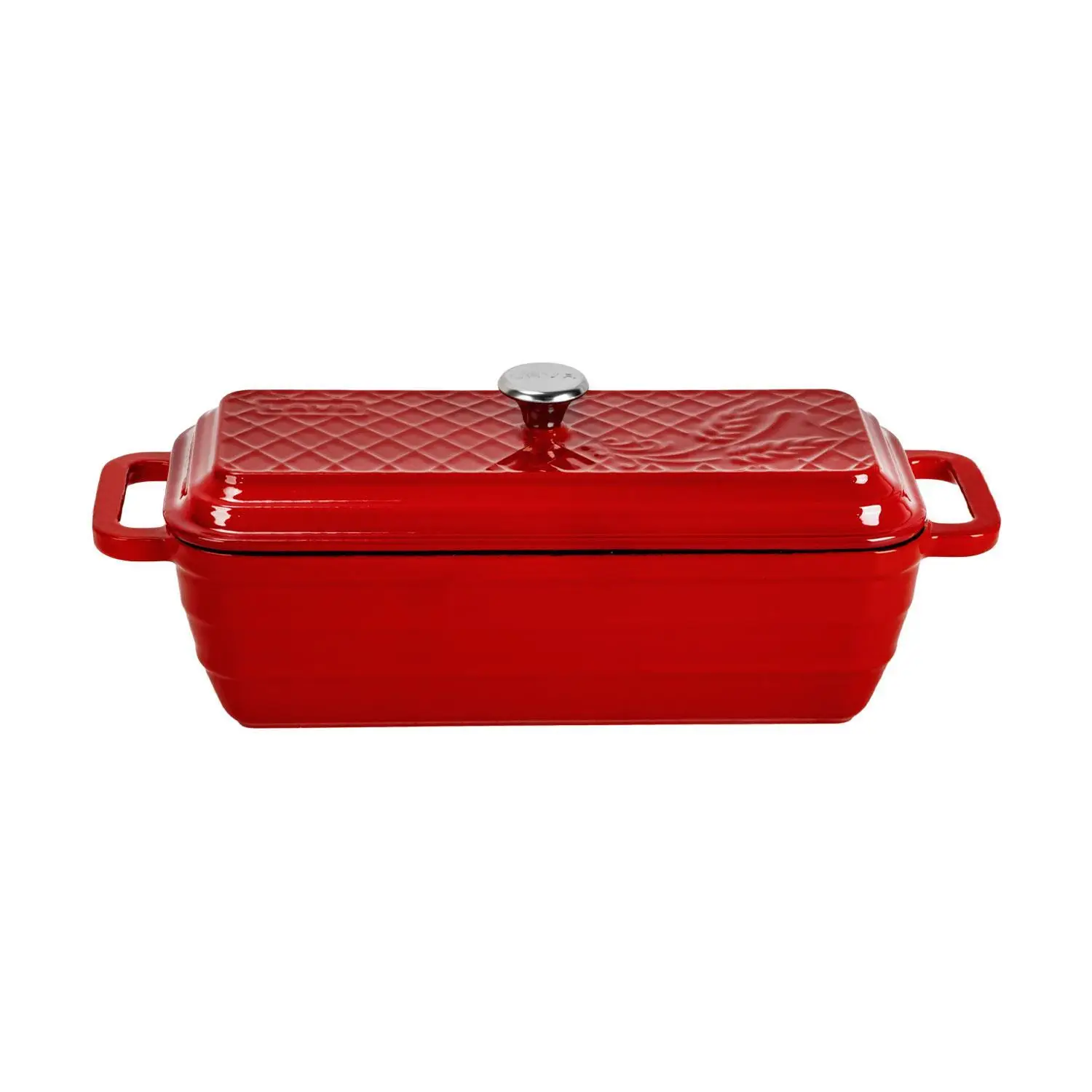
LAVA enamelled cast iron casserole solutions combine high heat retention, balanced cooking performance, a robust cast iron body and premium presentation, supporting different cooking and serving scenarios across restaurant, hotel and HoReCa operations.
There is no single right choice. Casseroles offer advantages for long cooking, braising, heat retention and oven-to-table service, while stainless steel can be particularly effective for rapid temperature control and high-volume preparation operations.
Yes. Enamelled cast iron casseroles can be used in restaurants, hotels and catering operations for braising, slow cooking, oven cooking and serving. The appropriate size and usage procedures should be selected according to the requirements of the operation.
The high thermal mass of cast iron helps it absorb and store heat. As a result, a casserole can retain its temperature for longer even when the heat source changes.
No. Enamelled cast iron products differ from bare cast iron products. Routine seasoning is not required because of the protective enamel surface.
Stainless steel offers advantages such as durability, hygienic use, different product constructions and suitability for intensive operations. High-quality multi-layer products, in particular, can provide fast and controlled heat management.
Yes. One of the key advantages of enamelled cast iron casseroles is that food can be served directly from the cooking equipment without transferring it to a separate serving dish. This approach can help retain heat while also providing a premium table presentation.
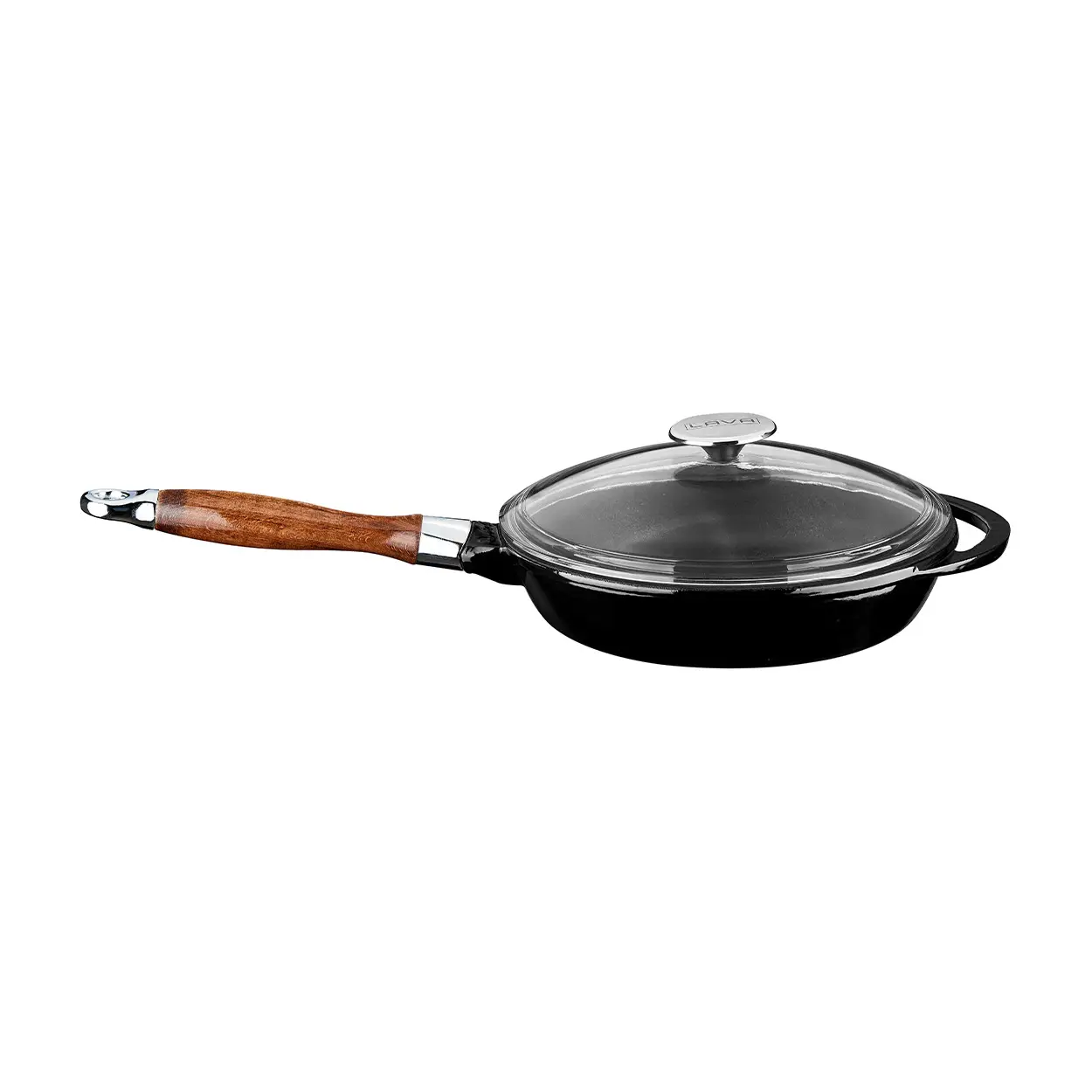
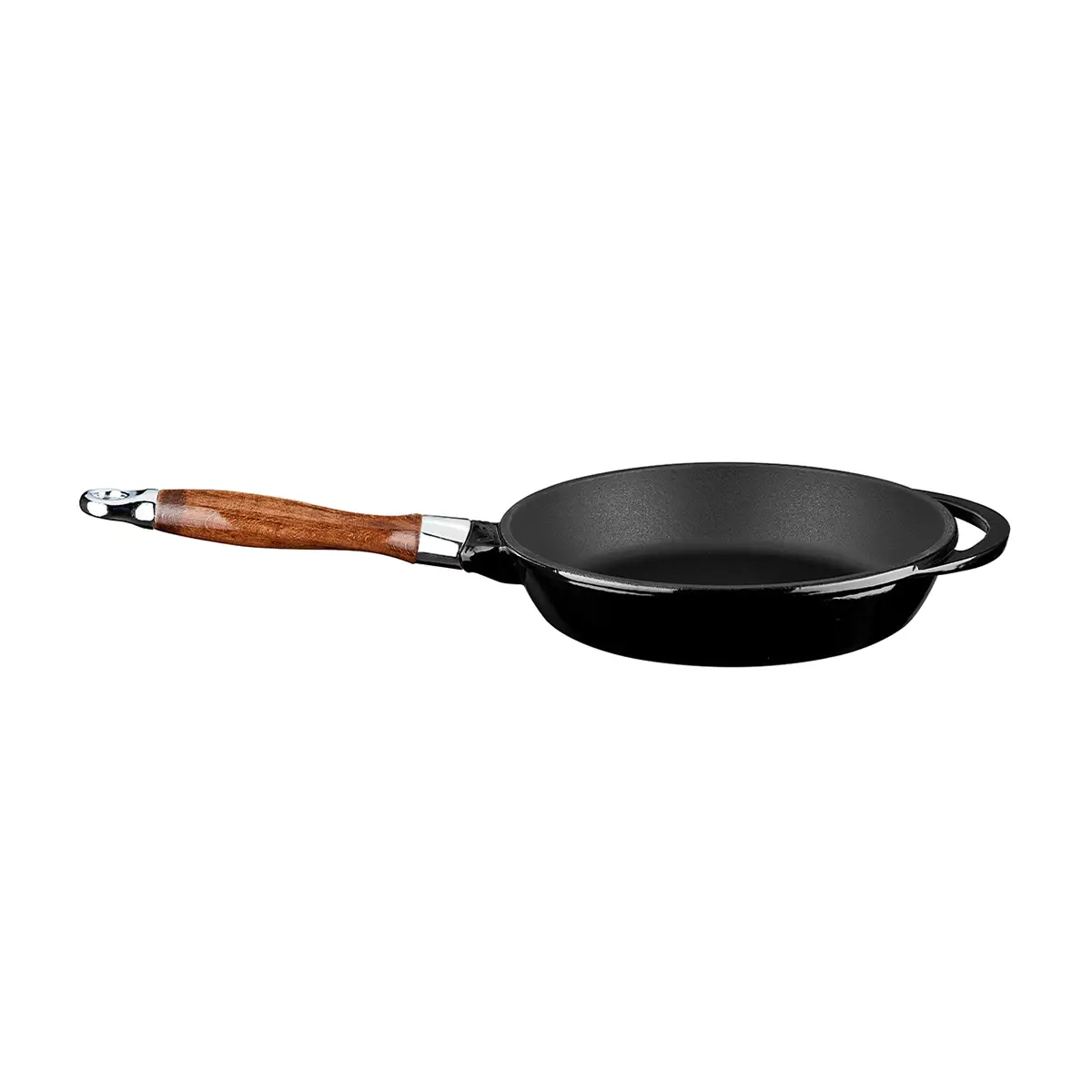
11.08.2026Lava Cast Iron Round Heritage Series Frying Pan. Glass Lid, Dia. Ø 28cm.








Lava Metal Döküm San. ve Tic. A.Ş. © 2026 All Rights Reserved.

0
)