×

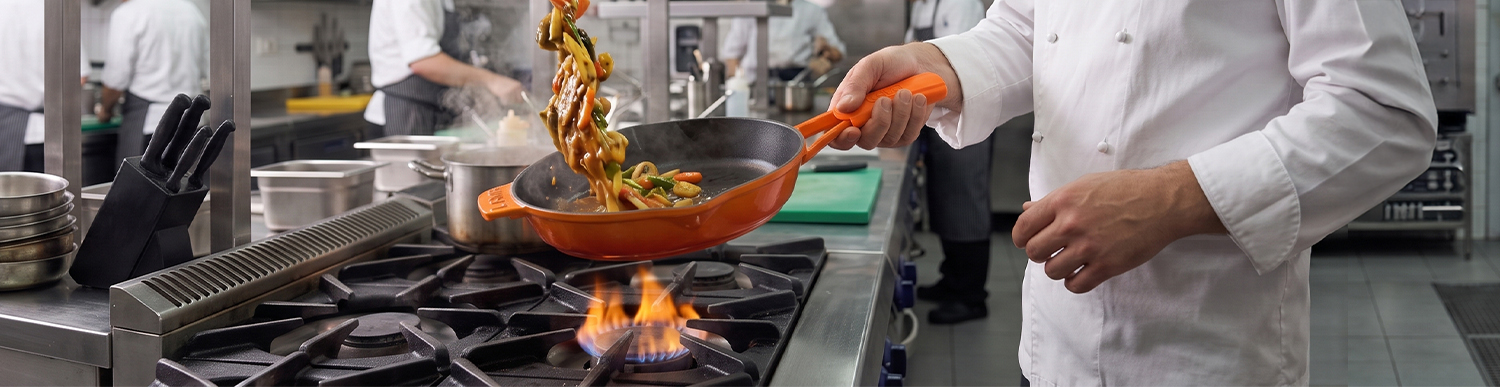
Choosing professional kitchen equipment should begin with cooking technique, service volume and operational workflow rather than material alone. Enamelled cast iron casseroles are well suited to braising, slow cooking and heat-retaining service; cast iron grill and frying pans support searing and high-temperature cooking; stainless steel cookware provides responsiveness for sauces, sautéing and fast preparations. Professional kitchens can achieve better results by combining cookware types according to their individual thermal and operational strengths.
Estimated Reading Time: 9–10 minutes
Choosing the right professional kitchen equipment is not simply a matter of selecting the most durable pan or the most familiar cookware material. In a commercial kitchen, each piece of cookware should match a specific cooking technique, service model and operational requirement.
Cast iron casseroles can provide excellent heat retention for braising and slow cooking. Grill pans support high-temperature cooking and distinctive searing. Stainless steel cookware offers responsiveness and versatility for many fast-paced preparations, while enamelled cast iron serving pieces can support both cooking and oven-to-table presentation.
For restaurants, hotels and catering operations, the key question is therefore not “Which cookware is best?” but “Which cookware is best for this particular task?”
This guide explains how to build a professional cookware mix around cooking performance, workflow, service style and long-term operational value.
A commercial kitchen operates under very different conditions from a domestic kitchen.
Cookware may be used repeatedly throughout a service, exposed to changing temperatures and incorporated into workflows involving several chefs and stations. At the same time, kitchen teams are expected to reproduce dishes consistently regardless of service volume.
The right commercial kitchen cookware can support:
This means cookware selection should begin with the operation rather than the product.
An executive chef may prioritise culinary control. An F&B manager may focus on workflow and service consistency. A purchasing manager may evaluate durability and lifecycle value. A restaurant operator may also consider how cookware contributes to the guest experience.
The strongest equipment strategy takes all of these factors into account.
There is no single material or cookware format that performs every professional cooking task equally well.
A practical equipment strategy combines different cookware types according to their strengths.
| Professional Application | Suitable Cookware | Main Operational Advantage |
|---|---|---|
| Slow cooking | Enamelled cast iron casserole | Heat retention |
| Braising | Cast iron casserole / braiser | Stable, controlled heat |
| Searing | Cast iron frying or grill pan | Strong heat storage |
| Grilling | Cast iron grill pan | High-temperature surface performance |
| Sauces | Stainless steel saucepan | Responsive temperature control |
| Fast sautéing | Stainless steel frying pan | Rapid heat adjustment |
| Batch cooking | Large casserole / commercial cooking vessel | Capacity and heat stability |
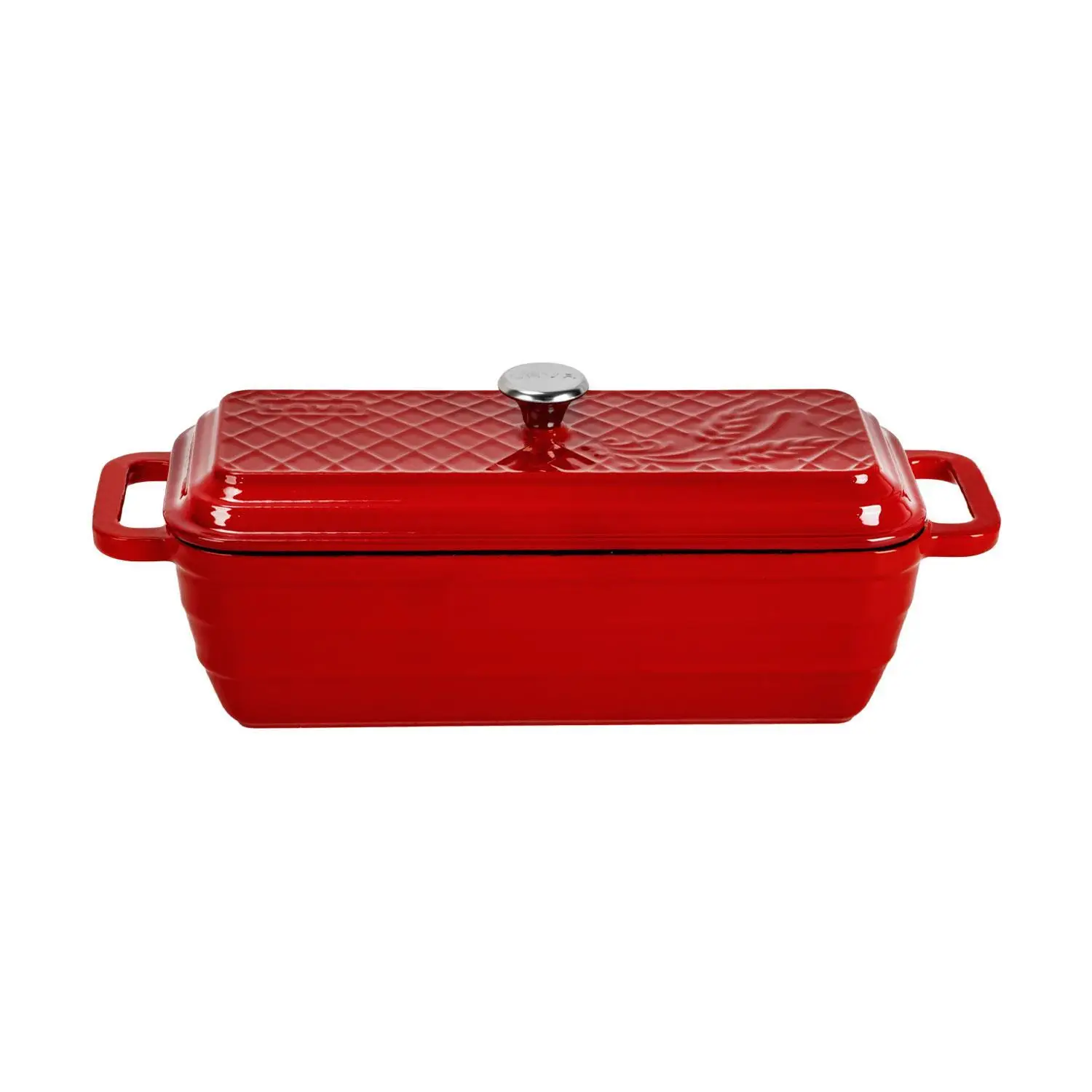
| Oven-to-table service | Enamelled cast iron cookware | Cooking and presentation in one vessel |
| Sharing dishes | Cast iron serving cookware | Heat retention and presentation |
| Buffet presentation | Heat-retaining serving cookware | Temperature stability during service |
The objective is therefore not to replace every material with one solution. It is to assign the right equipment to the right operational function.
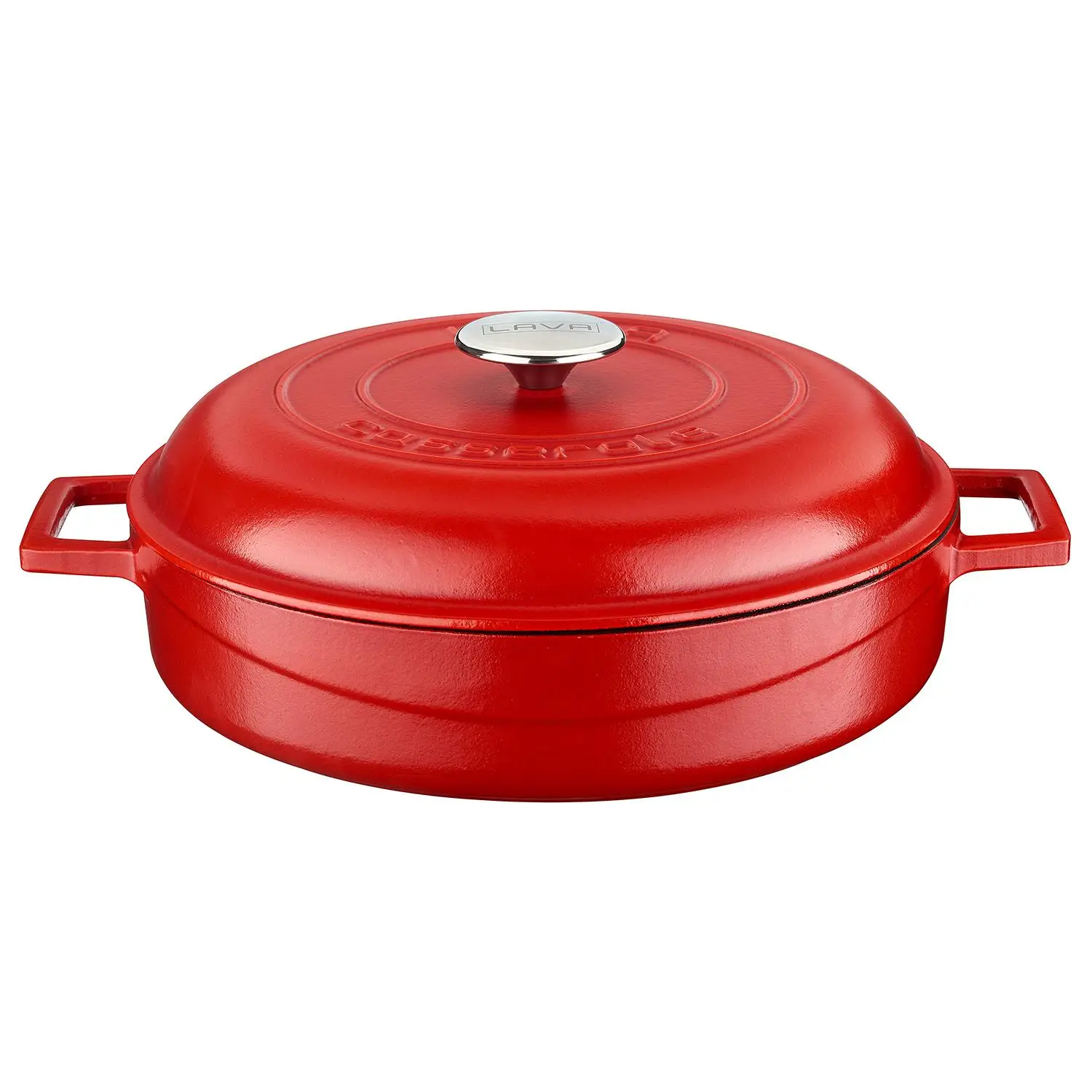
For professional kitchens working with braised meats, stews, slow-cooked vegetables, sauces and similar preparations, an enamelled cast iron casserole can be particularly valuable.
Cast iron has substantial thermal mass. Once heated, it retains heat effectively and distributes it steadily across the cooking vessel.
This characteristic is useful for preparations requiring prolonged and relatively stable cooking conditions.
They are particularly suitable for:
LAVA enamelled cast iron cookware combines the thermal characteristics of cast iron with an enamelled cooking surface. Unlike raw cast iron, enamelled cast iron does not require routine seasoning to maintain the cooking surface.
This distinction is important in professional environments where standardised maintenance procedures and ease of cleaning can affect everyday operations.
High heat retention can also support service consistency.
When cookware maintains thermal energy effectively, food can remain at a more stable serving temperature after leaving the primary heat source. This can be valuable for sharing dishes, buffet applications and dishes that move directly from the kitchen to the table.
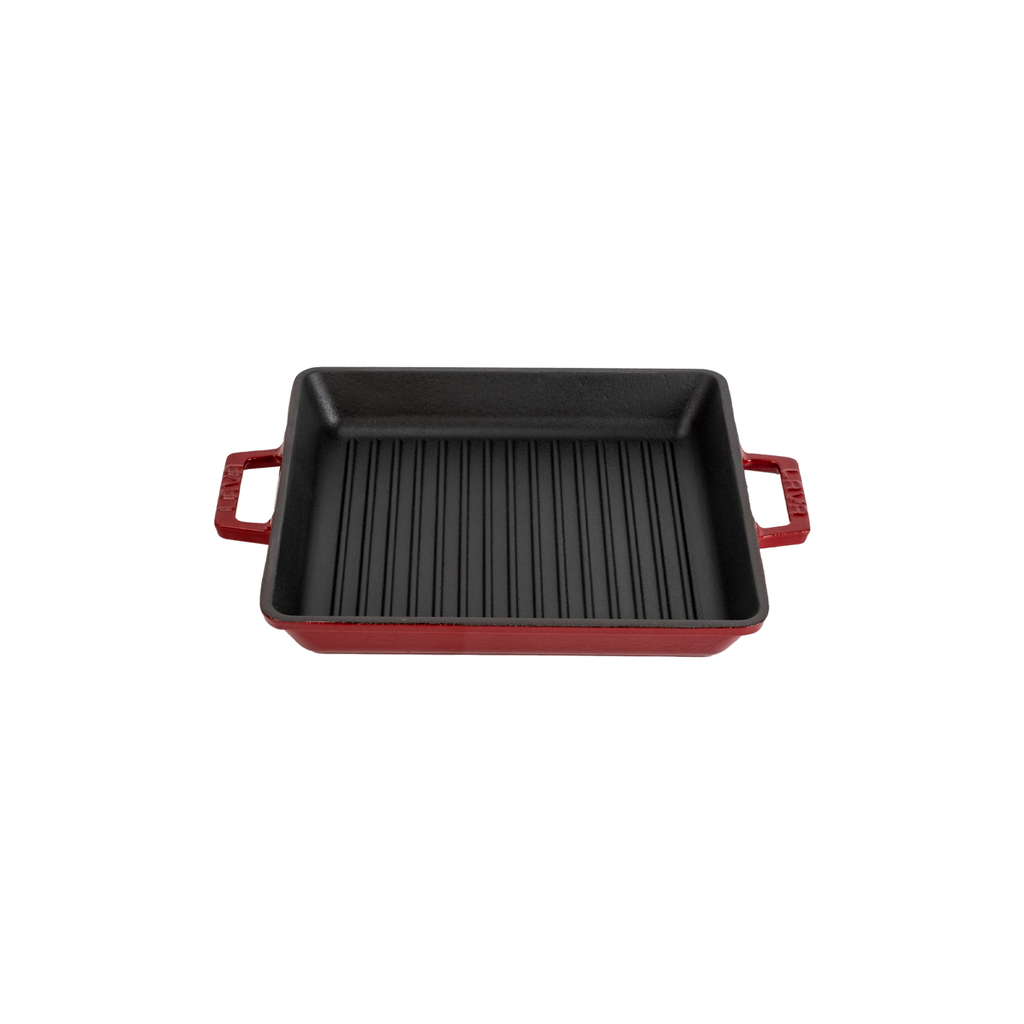
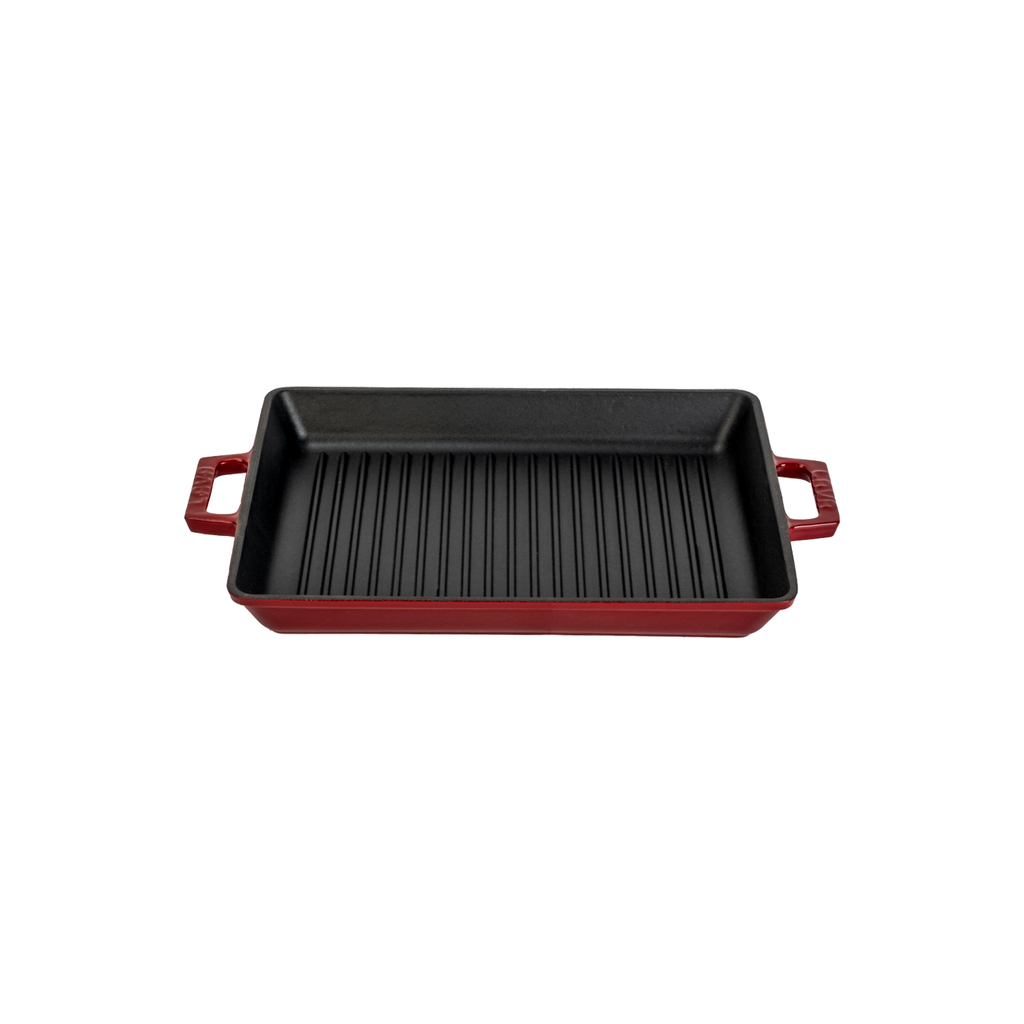
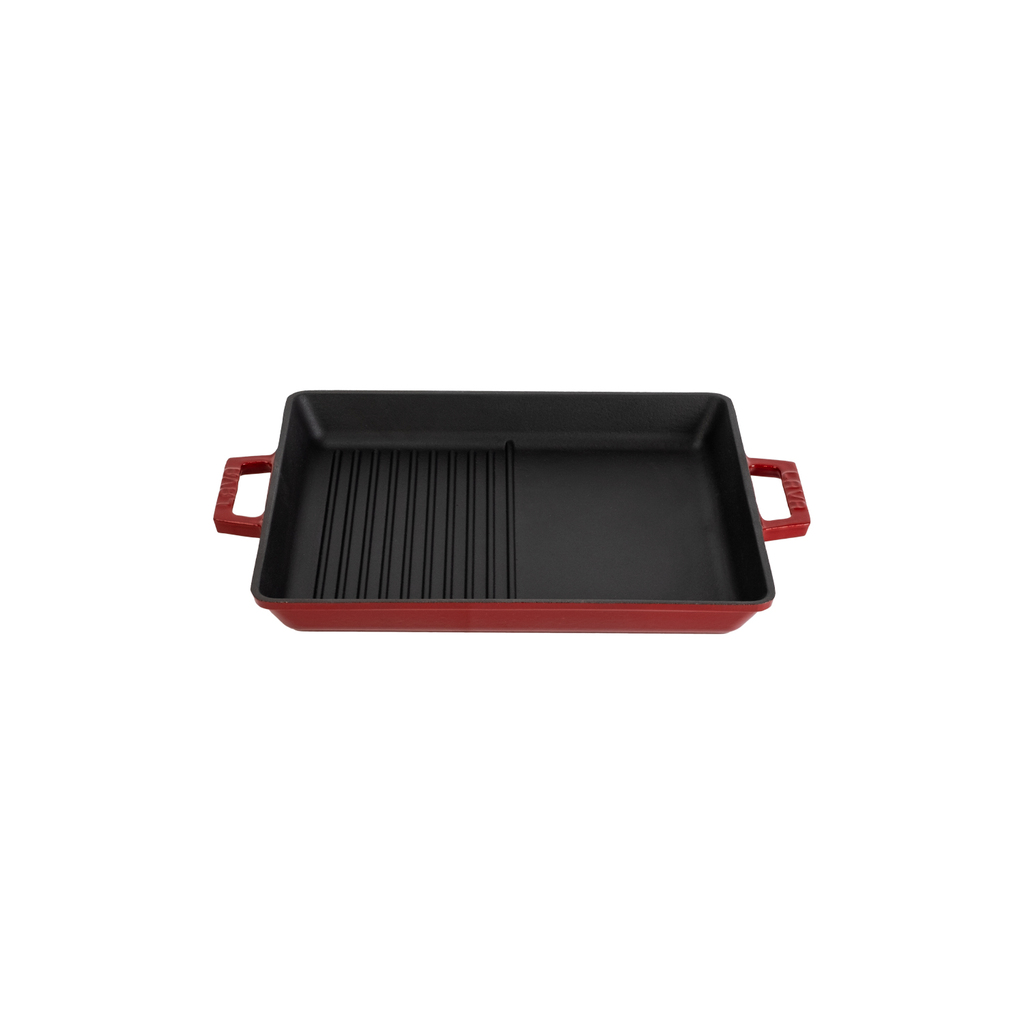
A professional grill pan performs a different function.
Instead of focusing primarily on prolonged cooking, it should provide a stable high-temperature cooking surface suitable for ingredients requiring strong surface heat.
Cast iron is particularly effective in this context because its thermal mass helps the pan retain heat when colder ingredients are introduced.
Cast iron grill pans can be used for:
They can be especially useful in restaurant concepts where grill-style preparation is required without relying exclusively on a large dedicated grill station.
Depending on the menu and service model, grill pans may therefore complement rather than replace larger commercial grilling equipment.
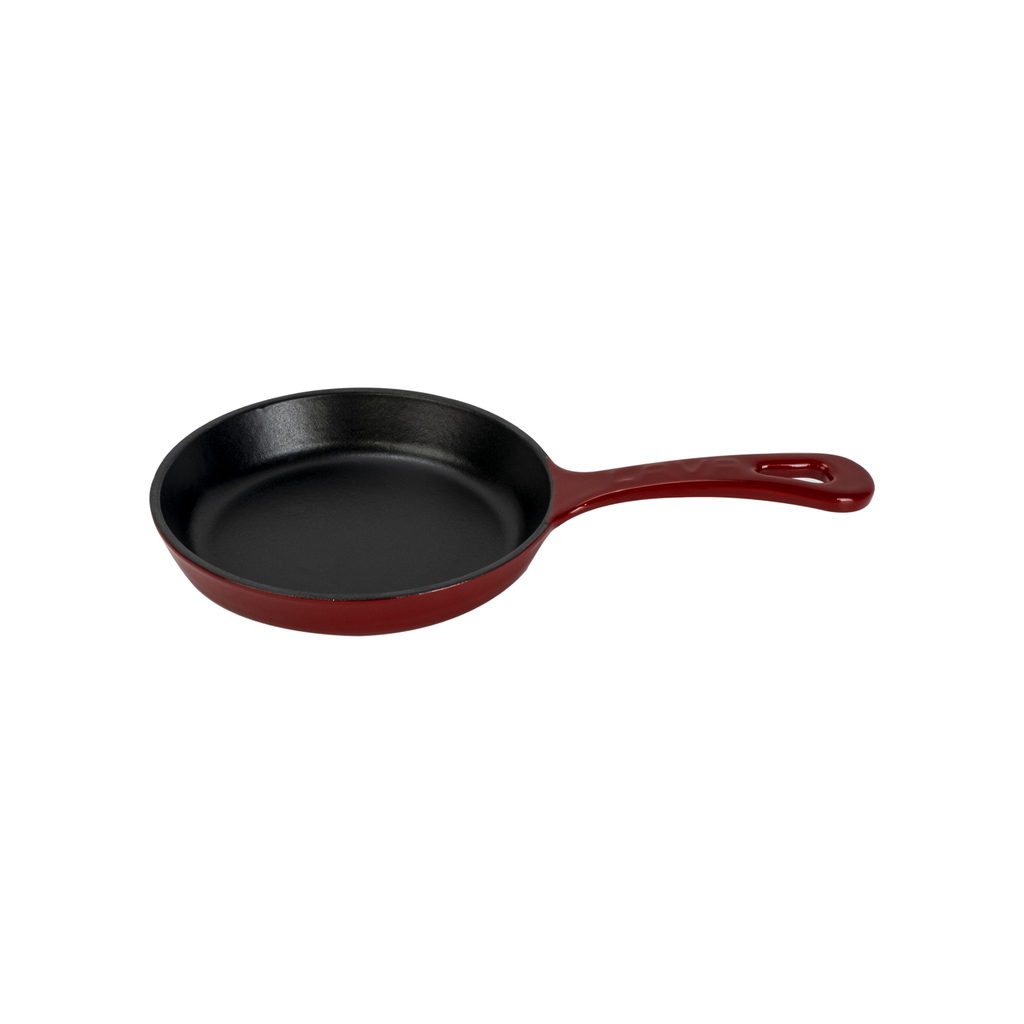
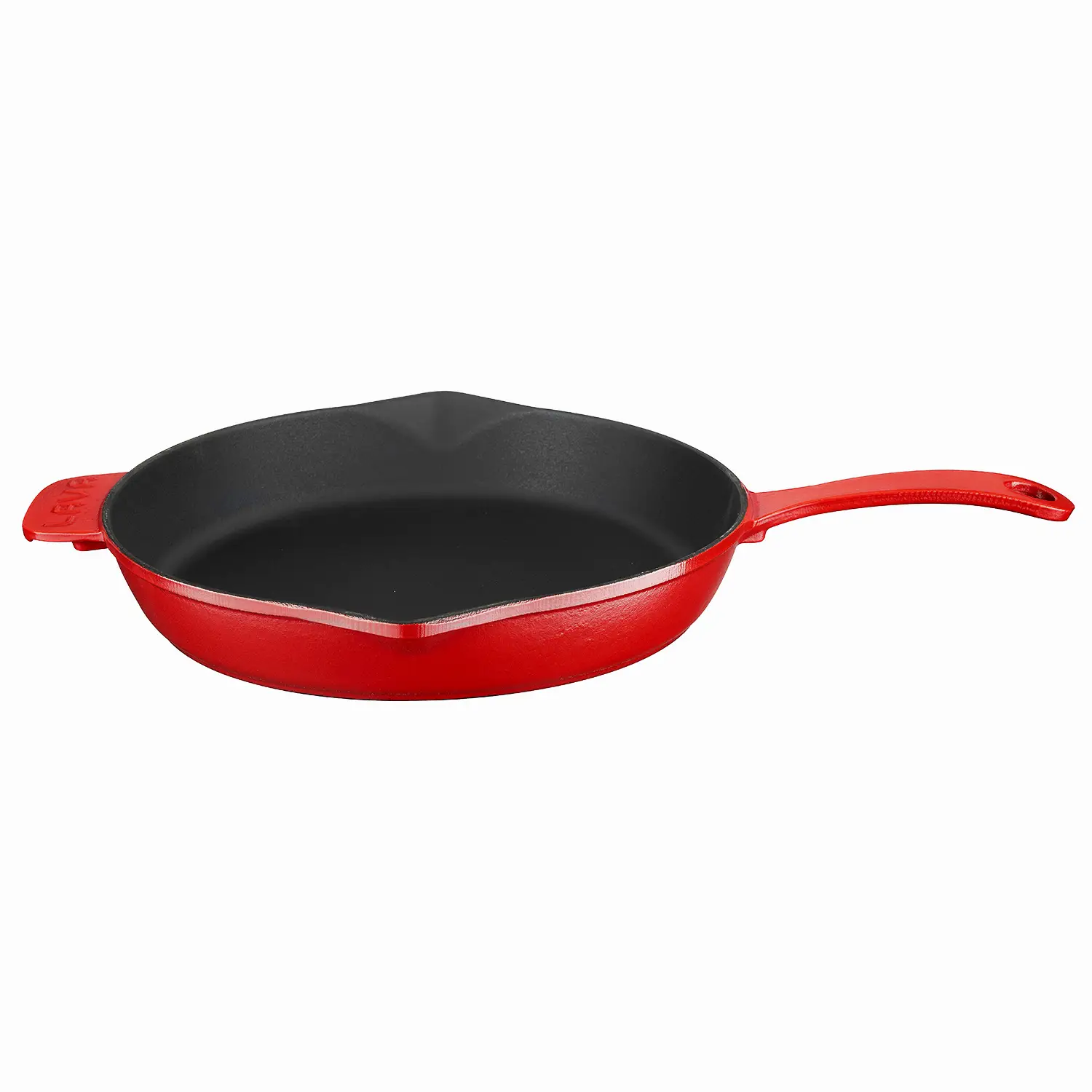
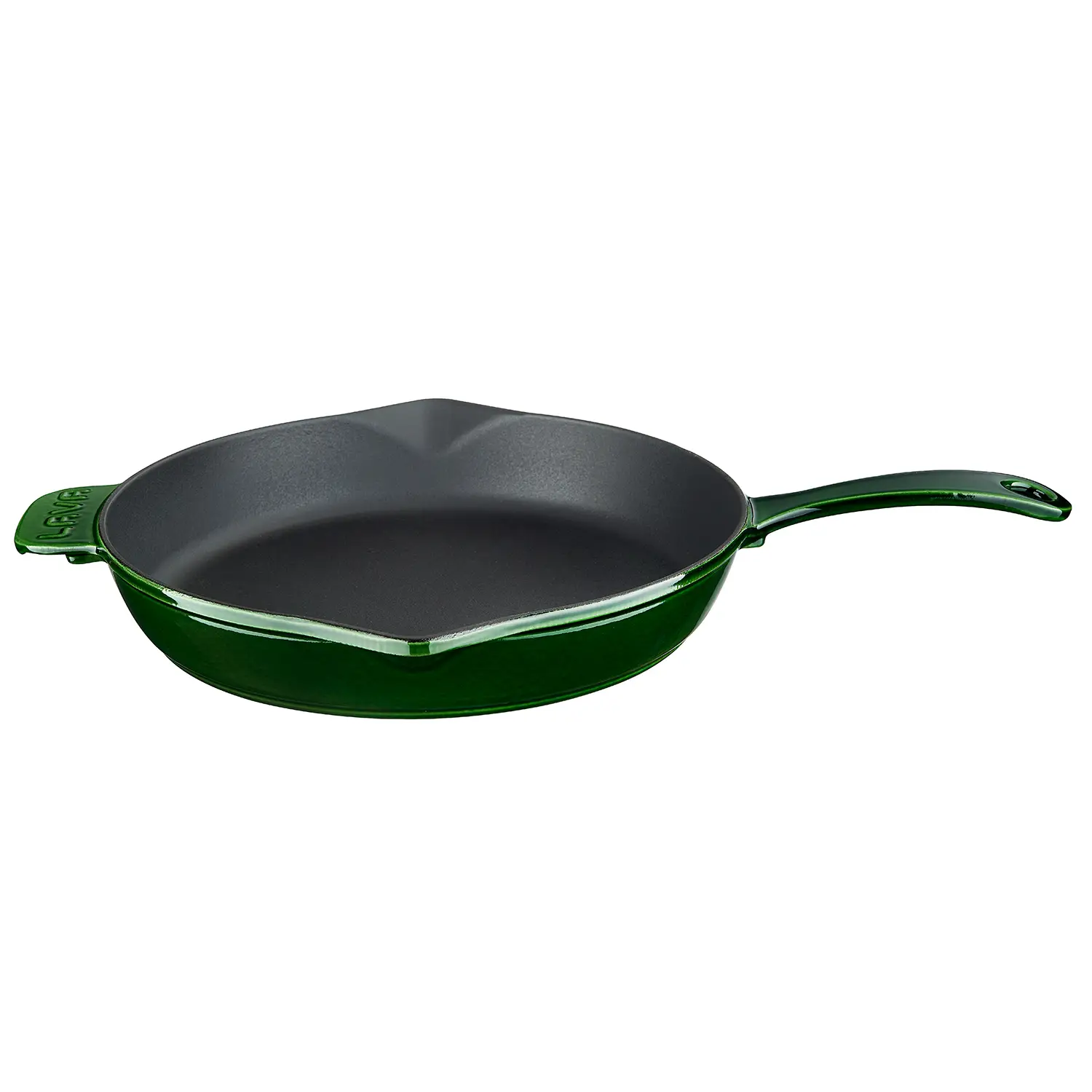
Professional cast iron frying pans provide another option for preparations requiring sustained surface heat.
Their heat retention characteristics can support:
The main distinction between cast iron and lighter cookware becomes apparent when ingredients are added.
A heavy cast iron cooking surface generally changes temperature more gradually. This thermal stability can be beneficial when maintaining strong cooking conditions is more important than rapidly changing temperature.
However, this characteristic also means chefs should manage preheating and heat adjustment differently than they would with lighter cookware.
Stainless steel remains one of the most important materials in professional kitchens.
Its strengths are different from those of cast iron.
Depending on construction, professional stainless steel cookware can respond relatively quickly to changes in burner output. This makes it valuable for preparations where chefs need frequent and immediate temperature adjustments.
Typical applications include:
Rather than asking whether cast iron or stainless steel is universally better, professional kitchens should consider their different thermal behaviours.
Cast iron prioritises thermal stability and heat retention. Stainless steel can offer greater responsiveness.
A well-equipped commercial kitchen will often benefit from both.
Modern restaurant equipment is increasingly expected to perform beyond the kitchen.
In many hospitality concepts, the cooking vessel itself becomes part of the presentation.
This is particularly relevant to:
Enamelled cast iron is particularly well suited to this approach because the same vessel can potentially move through several stages:
cook → finish → hold → present → serve
This can reduce the need to transfer food between multiple pieces of equipment while creating a distinctive presentation at the table.
For restaurants, cookware therefore becomes part of both operational workflow and brand presentation.
One of the most useful distinctions for professional buyers is the difference between heat retention and heat responsiveness.
They are not the same thing.
Heat-retaining cookware stores thermal energy and releases it gradually.
This is valuable for:
Enamelled cast iron performs particularly strongly in this area.
Responsive cookware reacts more quickly when the heat source is increased or reduced.
This is useful for:
Different stations may therefore require completely different cookware strategies.
Purchasing decisions should begin with an analysis of the menu and kitchen workflow.
Identify the dominant cooking techniques.
Does the kitchen rely heavily on:
The menu should determine the cookware mix.
A 30-cover fine-dining restaurant and a 300-cover hotel operation do not require identical equipment.
High-volume kitchens should evaluate cookware according to:
Capacity should be selected around actual production requirements rather than simply purchasing the largest available vessel.
Ask what happens after cooking.
Is the food plated immediately?
Does it move to a buffet?
Will the cooking vessel be taken directly to the table?
Does the dish need to maintain temperature during sharing service?
These questions can significantly change equipment requirements.
For example, an oven-to-table restaurant concept may benefit from enamelled cast iron because cooking performance and presentation can be combined within one piece of cookware.
Professional cookware is an operational asset.
A lower initial purchase price does not necessarily mean a lower total cost over the life of the equipment.
Purchasing teams should consider:
purchase cost + expected service life + frequency of use + maintenance requirements + versatility + replacement frequency
Durable cookware that performs several functions may create stronger lifecycle value even when its initial cost is higher.
Professional buyers should verify compatibility with the kitchen's existing infrastructure before procurement.
Depending on the product, this may include:
LAVA enamelled cast iron cookware is designed for use with conventional cooking heat sources, including induction, while microwave use is not suitable.
Like every cookware material, enamelled cast iron should be selected for the applications where its characteristics create the most value.
Useful for braising, slow cooking, searing and temperature-sensitive service workflows.
Supports consistent cooking across the vessel.
Suitable designs can move from kitchen preparation to guest presentation.
Cast iron provides a robust structure suitable for long-term use when handled correctly.
Unlike traditional raw cast iron cookware, routine seasoning is not required.
Colour, form and material presence can support distinctive restaurant and buffet concepts.
Cast iron is heavier than many alternative cookware materials.
Its thermal mass means temperature changes are less immediate than with lighter cookware.
Enamelled surfaces should be protected from impacts and inappropriate utensils or handling practices.
These are not necessarily disadvantages. They are characteristics that determine whether the equipment is appropriate for a particular kitchen task.
For most commercial kitchens, the best equipment strategy is not based on a single material.
A more effective approach is to build a complementary cookware system.
For example:
Enamelled cast iron casserole
→ braising, slow cooking, batch cooking and oven-to-table service
Cast iron grill pan
→ grilling, searing and high-temperature surface cooking
Cast iron frying pan
→ pan roasting, searing and oven finishing
Stainless steel saucepan
→ sauces, reductions and liquid preparations
Stainless steel frying pan
→ fast sautéing and temperature-responsive cooking
Cast iron serving products
→ sharing dishes, buffet presentation and temperature-conscious table service
This approach allows chefs to select cookware according to technique rather than forcing one material to perform every task.
Different HoReCa environments also create different priorities.
Restaurants may prioritise cooking precision, station efficiency and presentation.
Cast iron casseroles, frying pans, grill pans and cook-and-serve pieces can complement stainless steel cookware across different menu applications.
Hotel kitchens frequently combine à la carte cooking, banqueting, breakfast and buffet operations.
This makes versatility, capacity and temperature management particularly important.
Heat-retaining cookware can be valuable where food must remain presentation-ready during longer service periods.
Catering operations need to consider production volume, service timing and holding conditions.
Cookware capable of supporting batch cooking and stable thermal performance can contribute to more predictable workflows.
When guests can see cookware during preparation or service, equipment becomes part of the visual identity of the restaurant.
In these environments, enamelled cast iron can combine professional cooking performance with distinctive presentation.
LAVA develops enamelled cast iron cookware across multiple formats suitable for professional foodservice applications.
The professional range includes cookware such as casseroles, frying pans, grill pans, gastronorm-style products and cook-and-serve solutions designed to address different cooking and presentation requirements.
For professional kitchens, the value of enamelled cast iron lies in the combination of:
Rather than positioning cast iron as a universal replacement for every piece of commercial kitchen cookware, LAVA enables professional buyers to incorporate enamelled cast iron where its thermal and presentation characteristics create the greatest operational value.
The best professional kitchen equipment strategy starts with the cooking process.
Casseroles, grill pans, frying pans, stainless steel cookware and serving pieces perform different roles. A commercial kitchen becomes more efficient when each piece of equipment is matched to the technique, service environment and workflow for which it is best suited.
For chefs, this means greater control over cooking performance. For F&B managers, it can support service consistency. For purchasing teams and restaurant operators, it creates a more rational framework for long-term equipment investment.
Enamelled cast iron is particularly valuable when heat retention, balanced heat distribution, durability and oven-to-table presentation are operational priorities.
The goal is therefore not to find one piece of cookware that does everything.
It is to build the right professional cookware system for the kitchen.
Most professional kitchens require a combination of casseroles or stockpots, frying pans, saucepans, grill equipment and specialised serving cookware. The exact mix should be determined by menu, cooking techniques, service volume and presentation requirements.
Yes. Cast iron is particularly useful for professional applications requiring high heat retention, stable heat distribution, searing, braising, slow cooking or oven-to-table presentation.
Cast iron generally provides greater thermal mass and heat retention, while stainless steel cookware can provide faster temperature responsiveness depending on its construction. Professional kitchens commonly use both for different cooking techniques.
No. Enamelled cast iron should not be treated like traditional raw cast iron. Its enamelled cooking surface does not require routine seasoning to maintain a protective cooking layer.
Enamelled cast iron casseroles are particularly suitable for slow cooking and braising because their thermal mass supports stable, sustained cooking conditions.
Enamelled cast iron cookware is particularly effective for oven-to-table concepts because appropriate pieces can support cooking, heat retention and presentation in the same vessel.
Purchasing teams should evaluate menu requirements, cooking techniques, capacity, service volume, heat-source compatibility, durability, maintenance, versatility, storage, handling and expected lifecycle value rather than comparing purchase price alone.
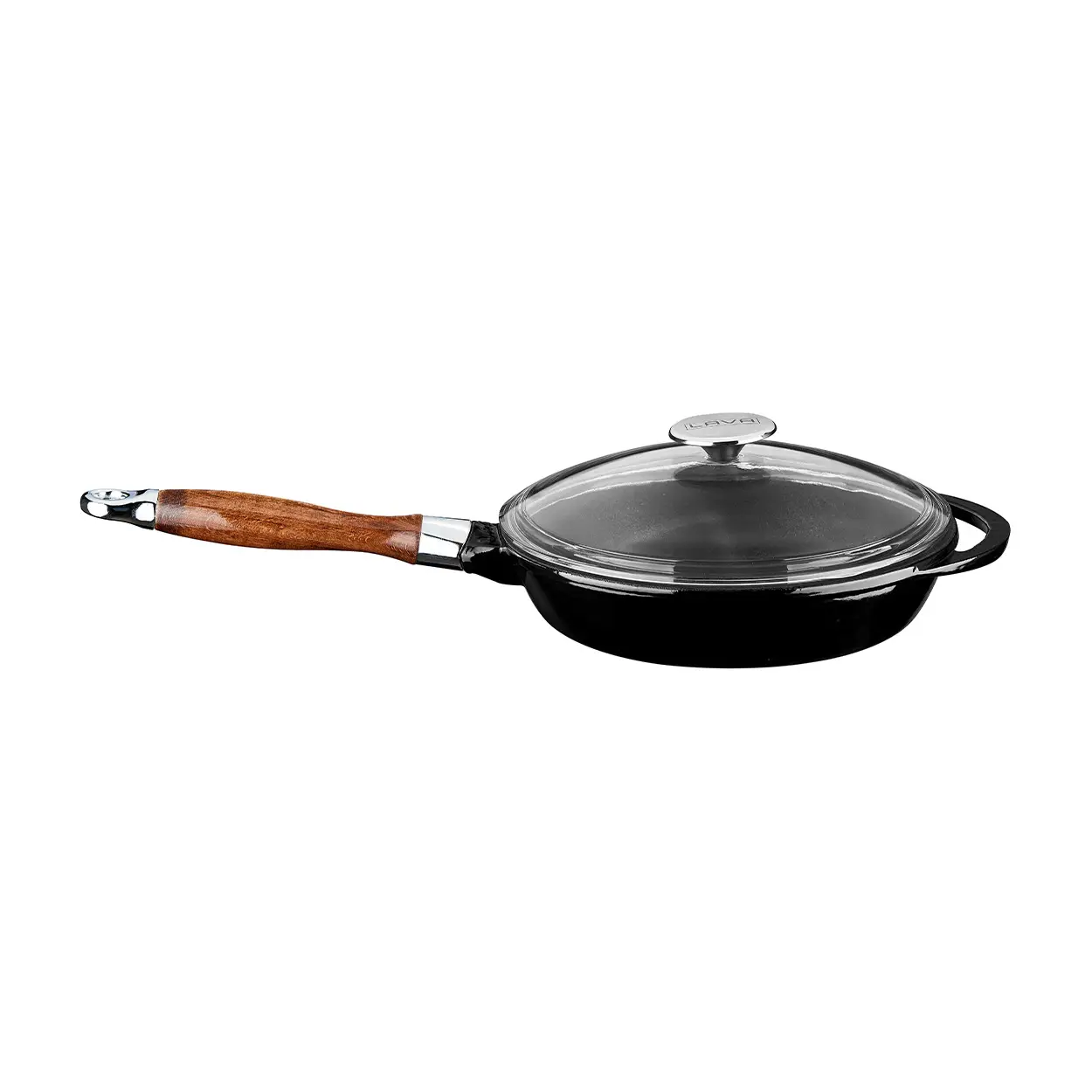
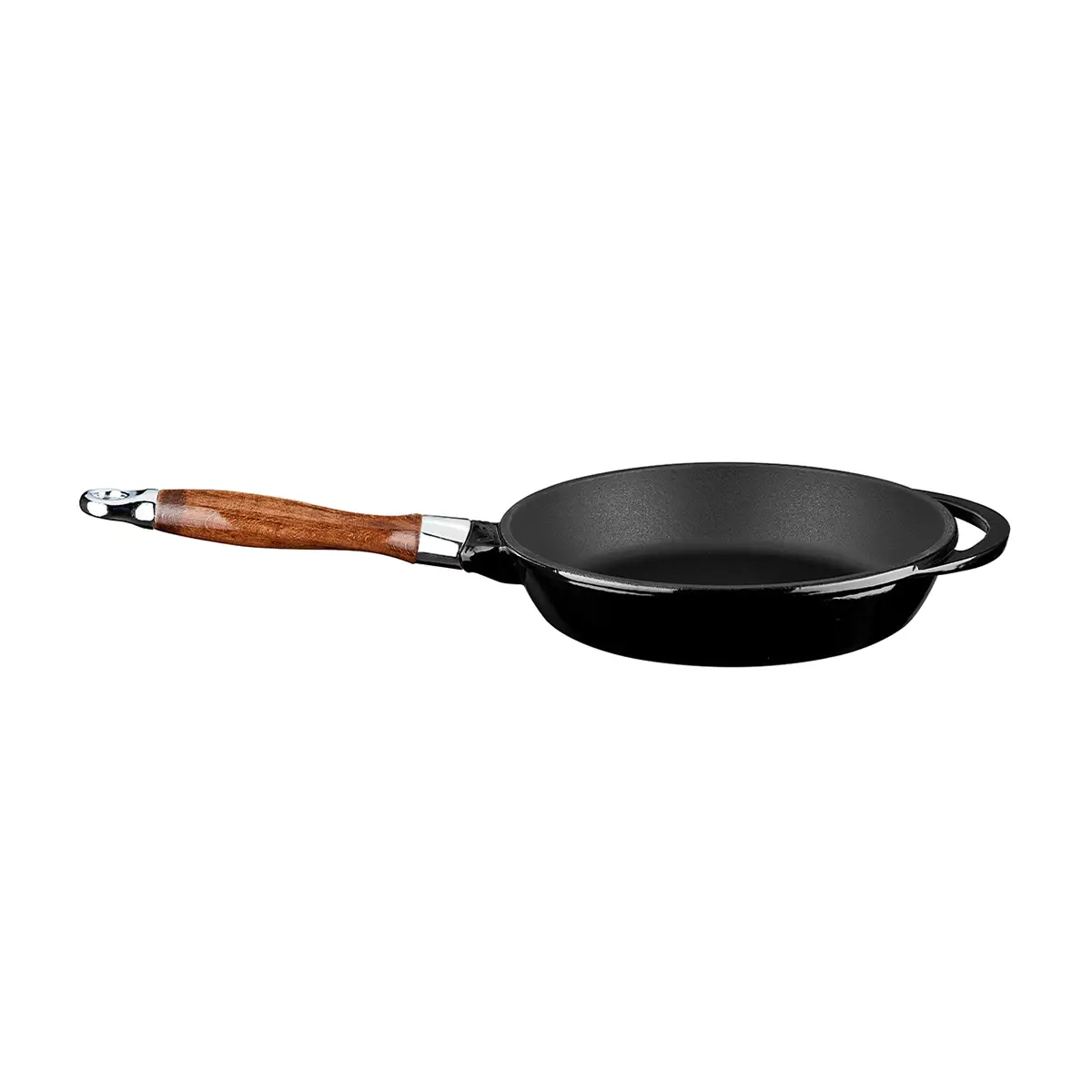
19.08.2026Lava Cast Iron Round Heritage Series Frying Pan. Glass Lid, Dia. Ø 28cm.








Lava Metal Döküm San. ve Tic. A.Ş. © 2026 All Rights Reserved.

0
)